

Jump to:
In recent years, Korean and Japanese beauty regimes and products have gained global attention for their high-quality beauty and skincare products that achieve transformative results to produce flawless, smooth, glossy skin. However, unlike K-Beauty skincare routines that usually consist of an extensive 8-10 steps, a Japanese skincare routine is traditionally comprised of just four steps: double cleanse, tone, and moisturize. Depending on your age or any skin issues you can add more steps, but these basic four are the foundation for most Japanese skincare routines.
A good skincare regime has been part of daily life for Japanese women for decades, based on a simple but intentional routine that uses innovative skincare products that combines Japanese cutting-edge technology with unique natural ingredients native to Japan and Asia.
In this article, we’ll explain the four basic steps of the Japanese skincare routine and recommend popular products that you can use to enhance your skin even further.
The Benefits of Following a Japanese Skincare Routine
There are numerous benefits to following a Japanese skincare routine consistently as with any skincare routine. Over time, it can help to reduce the appearance of wrinkles, improve skin tone, and give you a fresh, healthy look.
According to consumer research by Mintel, 41% of Japanese consumers take a preventative approach to beauty and skincare to produce radiant looking skin naturally without the need for a lot of makeup. The advantage of this approach means that you can have radiant looking skin without spending money on expensive foundation and makeup products.
A Japanese skincare routine will also expose your skin to all kinds of unique natural ingredients and botanical extracts that are seldom found in western beauty products. For example, Japanese citrus fruits such as yuzu are known for their anti-aging properties and promoting collagen production and are used widely in beauty products.
Another advantage to carrying out a Japanese skincare routine is that you don’t need to buy a lot of products to see results as a lot of them are multi-functional, requiring fewer steps in total and saving you time and money!
The Four Steps of Japanese Skincare

Step 1: Pre-Cleanse
The first two steps within the Japanese skincare routine consists of the double cleansing process. This does not mean cleaning your face twice with the same product but using two different kinds of cleansers to remove all impurities and dirt from the skin. The first step usually involves using an oil-based cleanser to remove products like makeup and sunscreen.
According to leading Japanese skincare brand DHC, this tradition of using an oil-based cleanser can be traced back centuries, to the days of Japanese geisha who would massage emollient oils that soften the skin onto their faces to remove white face makeup and vibrant red lip color.
Step 2: Cleanse
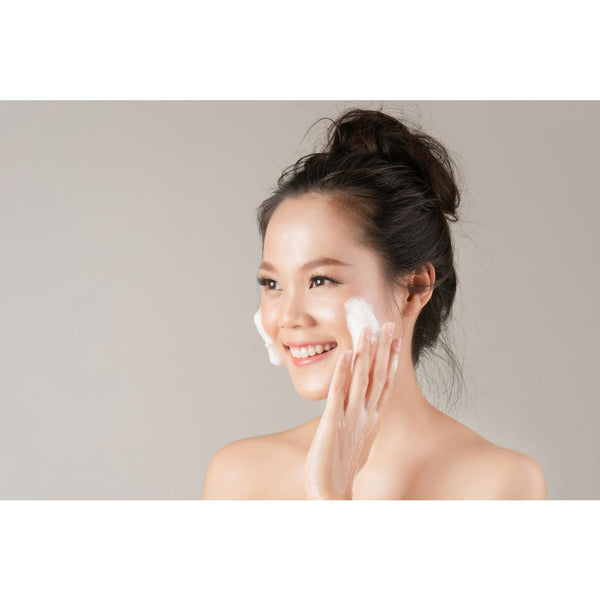
The second part of the double cleansing process involves using a foaming cleanser to remove any water-based impurities such as sweat, and make sure any pores are left clean of any dirt. The bubbles of foaming cleansers are believed to be more effective than other kinds of cleansers at removing impurities, and Japanese foaming cleansers are unique because they are much thicker and creamier when lathered up than Western products, often with a consistency that is more like shaving cream.
Step 3: Pre-Moisturize/Tone
In addition to a double cleanse, the Japanese skincare routine calls for a double moisturizing process to lock in maximum hydration. This double moisturizing routine consists of using a toner or serum followed by a final moisturizing cream.
According to Japanese skincare brand DHC, using a moisturizer alone after cleansing is not as effective as we think because the skin is not capable of fully absorbing the moisturizer if it is dry or just cleansed. Using a liquid lotion first softens the skin, hydrates it, and prepares it so it’s ready to absorb the moisturizing serum and cream.
Discover Japanese toners for every skincare concern:
- Japanese brightening lotions for a radiant complexion.
- Japanese milky lotions for smooth and soft skin.
- Japanese acne lotions and toners for reducing excess oil and support blemish-prone skin.
- Japanese anti-aging lotions for a more youthful-looking complexion.
To target specific skin concerns with Japanese serums and treatments:
- Check out the best Japanese skincare serums for hydration, brightening, anti-aging, and barrier care.
- For dullness and uneven skin tone, browse these vitamin C skincare.
- If you want smoother-looking skin and improved elasticity, check out these retinol-packedskincare products.
- For deep hydration and plumper-looking skin, explore these hyaluronic acid.
- Sensitive or irritated skin may benefit from these CICA skincare.
- You can also discover the nourishing benefits of squalane-packed Japanese beauty products, which help moisturize, soften, and protect skin without feeling heavy.
You can also incorporate Japanese face masks and face packs into your routine a few times a week for extra hydration, brightening, and pore care. Sheet masks are especially popular in J-beauty for delivering concentrated moisture and soothing ingredients to the skin, while clay and cream-based face packs help deeply cleanse pores and improve skin texture.
Step 4: Moisturize
The final stage of the Japanese skincare routine is to apply another moisturizer to add a second layer of maximum hydration, helping to repair your skin’s natural protective barrier, and leaving your skin feeling soft and smooth.
For perfect moisturizer to complete your skincare routine, make sure to check the best Japanese face creams worth the investment for rich hydration and daily skin barrier support, Japanese brightening creams and gels for a luminous complexion to help improve the appearance of dullness and uneven skin tone, and Japanese anti-aging face creams designed to support firmer, smoother-looking skin while reducing the appearance of fine lines.
If you prefer a simplified routine, discover these all-in-one Japanese gel creams that combine hydration, moisturizing, and skincare benefits in a single step.
You can also swap to a sunscreen or moisturizer with SPF for lightweight hydration and daily sun protection.
Where Can I Find Japanese Skincare Products Online?
You can order all of the products mentioned within this article online directly from Japan through the Japanese Taste Store, along with an extensive range of other Japanese skincare products such as sunscreens, facial masks, and eye creams. Featured skincare brands include Shiseido, DHC, Rohto Hado Labo, Kao, and Transino.
If you’re still browsing and learning more about J-beauty, explore trusted and iconic Japanese skincare brands in this guide to best Japanese skincare brands, featuring popular names loved for their quality, gentle formulas, and innovative ingredients.
If you’re ready to start your own J-beauty haul, check out 30 must-try Japanese skincare products to discover bestselling Japanese skincare, trusted by shoppers around the world.


0 comments